


Common errors in electrophoresis
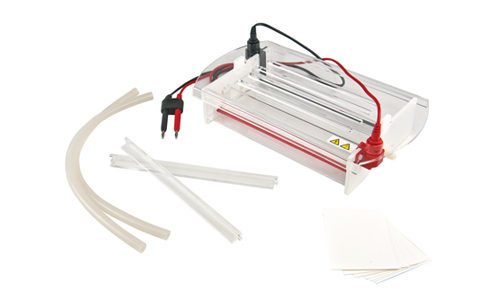
Gel electrophoresis is used in laboratories to classify and measure proteins or nucleic acids. After careful preparation, the samples are loaded onto one end of the gel, an electric current is applied, and the samples run towards the positive end of the tray. As with any scientific procedure, the possibility of human error and other sources of error exists and must be taken into consideration when interpreting the results.
Reanimación con líquidos en enfermos agudos graves
Los líquidos intravenosos (IV)son uno de los tratamientos indicados con mayor frecuencia en los hospitales. El empleo de líquidos IV en algunas situaciones de reanimación, como la hemorragia por trauma, tiene buena evidencia a su favor. En situaciones de urgencia como el shock, su utilidad no está tan bien documentada, aunque el tratamiento hídrico se recomienda en numerosas guías y revisiones.
Resuscitation with fluids in acutely ill patients
Intravenous (IV)fluids are one of the most frequently prescribed treatments in hospitals. The use of IV fluids in some resuscitation situations, such as trauma hemorrhage, has good evidence in their favor. In emergency situations such as shock, its usefulness is not so well documented, although water treatment is recommended in numerous guides and reviews.
How to obtain coagulation times?
Coagulation is the result of a coordinated interaction of blood proteins, circulating cells, cells of the vasculature and proteins of the extracellular matrix in the vessel wall. This complex mechanism makes it difficult to evaluate in the laboratory, which is limited only to measuring circulating coagulation proteins and circulating cells, while the vascular elements are not measurable.
¿Cómo el exceso de comida daña la cognición?
Las estructuras cerebrales y las redes neuronales que median la navegación espacial, la toma de decisiones, la socialidad y la creatividad evolucionaron, en parte, para permitir el éxito en la adquisición de alimentos.
How does excess food damage cognition?
The brain structures and neural networks that mediate spatial navigation, decision making, sociality and creativity evolved, in part, to allow success in the acquisition of food.
¿Cómo se provoca la resistencia a la insulina?
Un nuevo trabajo en ratones revela cambios en el patrón de los microRNAs que provocan intolerancia a la glucosa y resistencia a la insulina. El estudio, publicado en la revista PNAS, explica el papel de estas moléculas, relacionadas con la obesidad, en la aparición de diabetes.
How is insulin resistance caused?
A new work in mice reveals changes in the pattern of microRNAs that cause glucose intolerance and insulin resistance. The study, published in the journal PNAS, explains the role of these molecules, related to obesity, in the onset of diabetes.
What is narcolepsy?
Narcolepsy was originally described towards the end of the 19th century and since then it has been possible to characterize more, having established its foundations, with a certain understanding of its biology. It is important to emphasize that currently, the treatments are better and wider, facilitating their management and thus improving the quality of life of patients.
¿Qué es la narcolepsia?
La narcolepsia fue descrita originalmente hacia finales del siglo XIX y desde entonces se ha podido caracterizar más, habiéndose establecido sus fundamentos, con cierta comprensión de su biología. Es importante destacar que actualmente, los tratamientos son mejores y más amplios, facilitando su manejo y mejorando así la calidad de vida de los pacientes.