


How to use your automatic pipette correctly?
Pipettes are widely used equipment in clinical and research laboratories. They are used to supply very exact amounts of fluids. Pipettes are devices that are used to measure or transfer small volumes of liquid from one container to another, with great accuracy; They are characterized by lacking a deposit.
What should you consider when using a balance?
The balance is used to measure the mass of a body or substance or also their weight, since between mass and weight there is a well defined relationship. In the laboratory the balance is used to carry out quality control activities, to prepare mixtures of components in predefined proportions and to determine specific densities or weights. Its origins lie more than 3500 years before Christ, in Egypt.
Fundamentals of laser and its application in urology
The laser, a light amplification device by stimulated radiation emission, is a device capable of transforming other energies into electromagnetic radiation by emitting light beams of different wavelengths. These are devices that amplify the light and produce coherent beams of light whose frequency ranges from infrared to X-rays. Depending on the medium used, lasers are often referred to as solid state, gas, semiconductors or liquids.
The incubators: an ideal atmosphere

The incubator is a device that uses various means of heat transfer and environmental control, to obtain conditions under which specialized laboratory procedures can be performed. In general, they have a system of electrical resistances that are controlled by devices such as thermostats or microprocessed controls. As for heat transfer systems, incubators basically use conduction and natural or forced convection.
How does a laminar flow hood work?
Laminar flow hoods are highly specialized equipment that allows obtaining a sterile and safe area for any need that is required within a laboratory. They can be: Horizontal and Vertical. Basically it constitutes a space, which, by means of a specific treatment of the air, allows to work in an area with a strict control of non-road particles. This type of equipment is used for certain processes where it is necessary to extreme the control of contamination.
What is a laboratory homogenizer?
Homogenization is a chemical process where various insoluble substances are constantly and intensively mixed in order to create soluble suspensions or double emulsions. The homogenization process will depend on the materials that the user intends to mix and how he will use them.
What is a microtome?
The microtomes are cutting instruments for the preparation of preparations that are used in microscopy. To meet the high demands of such preparations, the microtomes allow extremely thin cuts. Normally modern microtomes allow cuts of a thickness of 0.1 to 100 µm. By way of comparison: Human hair has a thickness between 50 and 70 µm.
pHmeter: Technology and accuracy
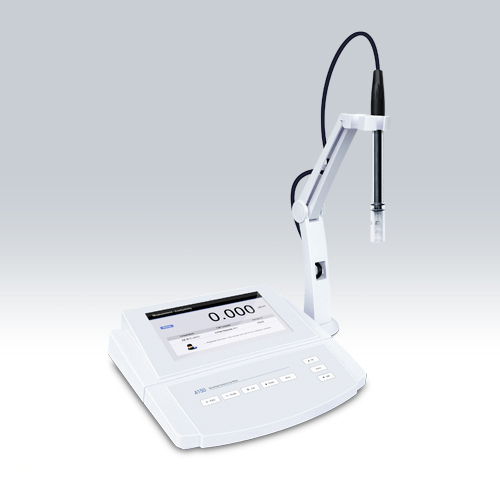
The measurement of pH (hydrogen potential) in the laboratory is one of the most important parameters that are performed for quality control and, according to specialists in the field, it is the second most important after temperature. The determination of the pH has a great field of application: research, industry, teaching, among others. In laboratories where it is relevant to know the potential of hydrogen, a pH measuring device will always be found as a primary instrument.
How does an electrophoresis device work?

Electrophoresis is an analytical method in which a controlled electrical current is used in order to separate biomolecules according to their size to electric charge ratio, using a gelatinous matrix as the basis. When a mixture of ionized and net-charged molecules are positioned in an electric field, they experience an attractive force towards the pole that has opposite charge, allowing some time for positively charged molecules to move towards the cathode (negative pole) and those positively charged will move towards the anode (positive pole).
How to address thrombocytosis?
Thrombocytosis is defined as a platelet count increased by more than two standard deviations above the average (> 450,000 / mm3) and is observed in 2.3% of the population, preferably in people> 40 years.