

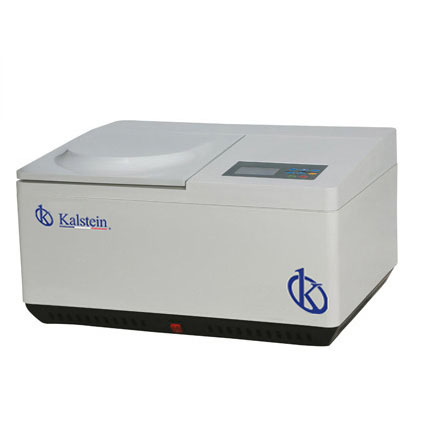
When it comes to selecting high-speed centrifuges for laboratory applications, choosing the right product is crucial. Both the High-Speed Centrifuge Table YR127 from Kalstein and the Eppendorf 5425 have made a name for themselves in scientific communities. They deliver precision, reliability, and efficiency, but subtle differences may sway your choice. By understanding their specifications, advantages, and applications, you’ll be better equipped to make an informed decision.
The High-Speed Centrifuge Table YR127 by Kalstein is renowned for its cutting-edge performance and innovative design. This centrifuge boasts a user-friendly interface, optimal speed control, and a robust construction that suits various laboratory needs. On the other hand, the Eppendorf 5425 is recognized for its compact design and versatility, offering solutions ideal for small to medium capacity requirements. Each centrifuge brings its unique offerings, making the decision dependent on specific laboratory demands.
| Feature | Kalstein YR127 | Eppendorf 5425 |
|---|---|---|
| Maximum Speed | High-speed capabilities | 15,060 rpm |
| Capacity | Diverse capacity options | 24 x 1.5/2.0 mL |
| User Interface | User-friendly, advanced controls | Intuitive interface |
| Dimensions | Larger for high-performance tasks | Compact design |
| Adaptability | Versatile for various protocols | Multi-application use |
How They Work
The High-Speed Centrifuge Table YR127 utilizes an advanced rotor design that provides exceptional speed and reliability for repetitive laboratory tasks. Its digital interface simplifies operation, allowing precise control over speed and runtime settings. This makes it ideal for preparative and analytical applications.
The Eppendorf 5425, while compact, is designed to meet general laboratory centrifugation needs. It operates with various rotors that accommodate differing tube types. Its uncomplicated interface ensures ease of use in educational and research settings.
What They’re Used For
Both centrifuges are perfect for separating particles in suspension by density. The Kalstein YR127 offers extensive versatility, appropriate for clinical, biochemistry, and molecular biology labs. Its adaptability to different protocols makes it perfect for specialized applications.
The Eppendorf 5425 is suitable for routine applications, such as microcentrifugation in biotechnology, microbiology, and clinical labs. Its more confined scope makes it ideally suited for general laboratory use where space should be conserved.
Types
The Kalstein YR127 ranges from basic models to highly sophisticated systems furnished with automatic balancing and refrigeration options. This range allows the user to choose depending on the complexity and specificity of laboratory tasks.
Meanwhile, the Eppendorf 5425 primarily caters to those needing high-speed yet small-capacity centrifugation, entailing fewer optional configurations but high efficiency for standard procedures.
Market Pricing
Kalstein’s High-Speed Centrifuge Table YR127 tends to inhabit the mid to higher-range price point reflecting its state-of-the-art features and durable design. Conversely, the Eppendorf 5425 offers competitive pricing in the compact high-speed category, making it a suitable option for budget-conscious laboratories seeking efficiency.
Frequently Asked Questions
What size tubes can I use with these centrifuges?
The Kalstein YR127 provides a variety of adapter options suitable for multiple tube sizes, while the Eppendorf 5425 commonly uses 1.5/2.0 mL tubes.
Are these centrifuges suitable for temperature-sensitive materials?
The Kalstein YR127 often includes models with cooling functions, whereas the Eppendorf 5425 lacks built-in refrigeration, making it less suited for such samples.
How easy are these centrifuges to maintain?
Both models are designed for user-friendly operation and maintenance, but Kalstein’s modular design often eases parts replacement.
Advantages and Disadvantages
Kalstein YR127 Advantages: High adaptability, advanced control features, and excellent safety measures.
Kalstein YR127 Disadvantages: Larger footprint may necessitate more space.
Eppendorf 5425 Advantages: Budget-friendly, space-saving design.
Eppendorf 5425 Disadvantages: Limited to smaller sample capacities and no refrigeration options.
Product Use In The Field
The Kalstein YR127 is often employed in high-demand environments needing rigorous testing and sample processing capacity. The Eppendorf 5425 shines in less demanding settings, benefiting institutions that require frequent yet straightforward laboratory protocols.
Recommendations
For those who require high-speed precision with the ability to handle larger sample volumes or specialty applications, the Kalstein YR127 is an excellent choice. Regular maintenance checks will ensure optimal performance. The Eppendorf 5425 suits laboratories that prioritize space efficiency and routine analysis, where its compact design and functionality excel.
For a seamless purchasing experience, consider generating a quote through the Kalstein Plus platform. If you’re seeking innovation and quality, you’ve arrived at the right place. Explore Kalstein’s exclusive laboratory equipment catalog. Each device is crafted with excellence. Our intuitive online channels are at your disposal, securing the most favorable prices. Don’t hesitate—bring science to life as part of our community. https://kalstein.eu/produit/high-speed-centrifuge-table-yr127/?lang=en.