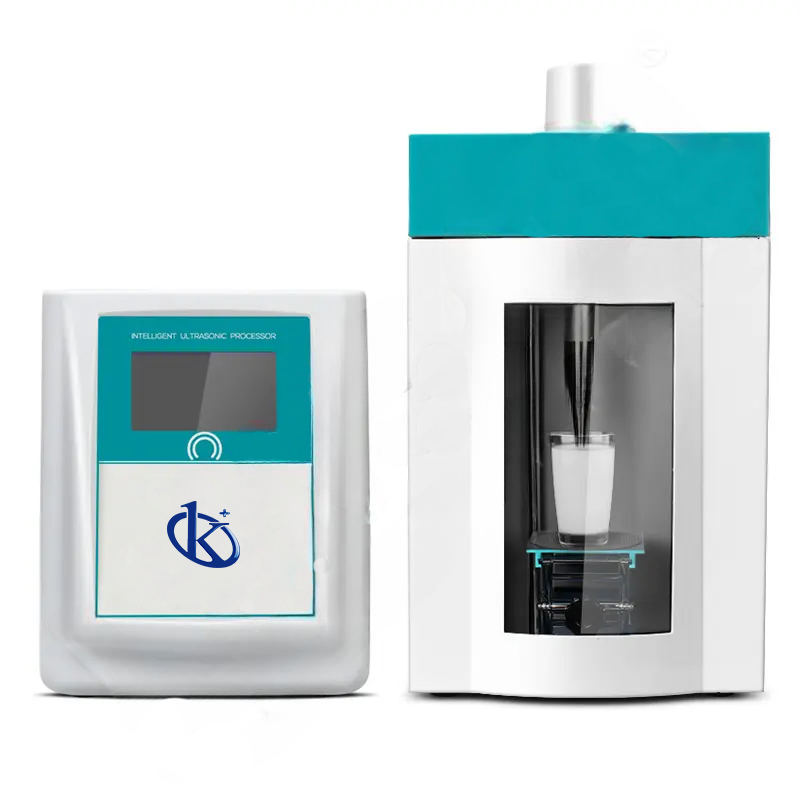
Ultrasonic Homogenizers: Practical Applications and Techniques 2026
As laboratory professionals, understanding the capabilities and applications of ultrasonic homogenizers is essential for achieving efficient and effective results. This article delves into real-world applications, best practices, and techniques relevant to 2026, ensuring you are equipped with the knowledge to leverage this technology in your laboratory workflows.
What is it used for in 2026
Ultrasonic homogenizers are widely utilized in various laboratory settings, including clinical and hospital laboratories, for tasks such as sample preparation, emulsification, and dispersion. Their ability to produce high shear forces makes them ideal for applications where uniformity and consistency are crucial. In 2026, their applications extend to:
- Cell Disruption: Effective for breaking down cells to extract proteins, DNA, or RNA.
- Emulsification: Creating stable emulsions in pharmaceutical formulations.
- Dispersion: Homogenizing solids in liquids for consistent mixtures.
- Particle Size Reduction: Reducing the size of particles to improve solubility and bioavailability.
History and evolution of the technology
The history of ultrasonic homogenization dates back to the early 20th century when ultrasound technology began to be explored for industrial applications. With advancements in technology, ultrasonic homogenizers evolved from large, cumbersome devices to compact, sophisticated equipment with enhanced functionality. Over the years, innovations have led to:
- Increased Efficiency: Modern ultrasonic homogenizers, like the YR05015 to YR05020 models, offer higher power outputs, enabling faster processing times.
- User-Friendly Interfaces: The integration of touch screen controls and data logging capabilities has simplified operation and monitoring.
- Enhanced Safety Features: New models come equipped with overload protection and automatic alarms to ensure safe operation.
How to use it step by step
Using an ultrasonic homogenizer involves several steps to ensure optimal results. Follow this step-by-step guide:
- Select the Appropriate Model: Choose a model based on the volume and type of sample (e.g., YR05015 for smaller samples, YR05020 for larger volumes).
- Set Up Equipment: Place the ultrasonic homogenizer on a stable surface and connect it to a power source. Ensure all components, including the probe, are clean and properly assembled.
- Prepare the Sample: Measure the sample volume and ensure it is compatible with the homogenizer's specifications.
- Adjust Settings: Set the desired power level, time, and frequency based on the sample type. For instance, use lower power for delicate samples.
- Start Homogenization: Immerse the probe in the sample and initiate the homogenization process. Monitor the temperature and listen for any alarms indicating issues.
- Complete the Process: Once the desired homogenization is achieved, stop the device and carefully remove the probe.
- Analyze the Sample: Proceed with analytical methods to evaluate the homogenized sample.
Best techniques and protocols
Utilizing ultrasonic homogenizers effectively requires adherence to best practices and protocols:
- Use Continuous Monitoring: Regularly check temperature and consistency during the process to prevent overheating.
- Optimize Probe Selection: Choose the appropriate probe diameter for the sample volume to ensure effective energy transfer.
- Control Operating Parameters: Adjust time and power settings based on the specific application to avoid sample degradation.
- Conduct Pre-Tests: Test small sample sizes to fine-tune settings before processing larger volumes.
Practical applications by laboratory type
Different laboratory types utilize ultrasonic homogenizers for various applications:
Clinical Laboratories
In clinical settings, ultrasonic homogenizers are employed for:
- Preparing samples for molecular diagnostics.
- Extracting biomolecules for research and analysis.
Pharmaceutical Laboratories
Pharmaceutical labs utilize these devices for:
- Creating stable emulsions for drug formulations.
- Reducing particle sizes to enhance drug solubility.
Food and Beverage Laboratories
In the food industry, ultrasonic homogenizers help in:
- Emulsifying sauces and dressings.
- Improving the consistency of food products.
Environmental Laboratories
Environmental labs use ultrasonic homogenizers for:
- Sample preparation in the analysis of pollutants.
- Enhancing extraction efficiencies of contaminants.
Regulations, standards and certifications
Laboratories using ultrasonic homogenizers must adhere to various regulations and standards to ensure safety and quality. Key regulations include:
- ISO 9001: Quality management systems to ensure consistent quality in laboratory processes.
- ISO/IEC 17025: General requirements for the competence of testing and calibration laboratories.
- FDA Regulations: Compliance for laboratories involved in the pharmaceutical industry.
Comparison with alternative technologies
While ultrasonic homogenizers are powerful, it is essential to compare them with alternative technologies:
- Mechanical Homogenizers: Provide less control over particle size and may require longer processing times.
- Bead Mills: Effective for certain applications but may introduce contamination risks from beads.
- High Pressure Homogenizers: Offer similar results but are generally more complex and costly to operate.
Comparison of available models
| Model | Best for | Key specs | Recommended use case |
|---|---|---|---|
| YR05015 | Small volume samples | 1.5 – 150W, 0.1 – 150 ml | Cell disruption for molecular biology applications |
| YR05016 | Medium volume preparation | 2-5 – 250 W, 0.1 – 300 ml | Emulsification for pharmaceutical formulations |
| YR05017 | Higher power needs | 10 – 650 W, 0.1 – 500 ml | Particle size reduction in food applications |
| YR05018 | Larger scale homogenization | 10 – 900 W, 0.1 – 600 ml | Environmental testing and sample preparation |
| YR05019 | High throughput applications | 20 – 1 200W, 1 – 1 000 ml | Pharmaceutical manufacturing processes |
| YR05020 | Large volume processing | 50 – 1 800W, 1 – 1 200 ml | Biotechnology applications requiring bulk processing |
Common mistakes and how to avoid them
Here are common mistakes made when using ultrasonic homogenizers and tips to avoid them:
- Not calibrating the equipment: Always ensure your device is calibrated according to the manufacturer’s guidelines.
- Exceeding recommended power settings: Use the appropriate power level to prevent sample degradation.
- Ignoring temperature control: Monitor the temperature throughout the process to avoid damaging sensitive samples.
Maintenance, calibration and good practices 2026
Regular maintenance and calibration are vital for the longevity and performance of ultrasonic homogenizers:
- Daily Checks: Clean the probes and check for wear or damage.
- Calibration: Perform calibration monthly to ensure accuracy.
- Documentation: Keep a log of maintenance and calibration activities for compliance purposes.
Cost-benefit analysis 2026
Investing in ultrasonic homogenizers can yield significant benefits:
- Time Savings: Enhanced processing speed leads to increased efficiency.
- Quality Improvements: Achieves consistent results, reducing the need for repeated experiments.
- Versatility: Applicable across diverse laboratory functions, making it a valuable asset.
Frequently asked questions
What are the key benefits of using ultrasonic homogenizers?
Ultrasonic homogenizers offer enhanced efficiency, high-quality emulsification, and the ability to handle various sample types, making them a versatile choice for laboratories.
How do I choose the right ultrasonic homogenizer model for my needs?
Consider the sample volume, desired application, and power requirements. For small samples, models like YR05015 are ideal, while larger volumes may require YR05020.
What precautions should I take when using these devices?
Always monitor the temperature, avoid exceeding recommended power levels, and ensure proper probe assembly to prevent accidents and damage.
How often should ultrasonic homogenizers be maintained?
Regular maintenance is crucial. Daily cleaning, monthly calibration, and periodic inspections ensure optimal performance and compliance.
Can ultrasonic homogenizers be used for sensitive samples?
Yes, with careful control of power and duration, ultrasonic homogenizers can process sensitive samples without damaging them.
What are some common applications in clinical laboratories?
Common applications include sample preparation for molecular diagnostics and extraction processes for biomolecules like DNA and proteins.
How can I get a quote for ultrasonic homogenizers?
For a personalized quote, please reach out to our sales team to explore the options available for your laboratory needs.
If you are looking for a fusion of innovation and quality, you have come to the right place. At Kalstein, we offer you the luxury of exploring our exclusive catalog of laboratory equipment. We manufacture every device to the highest standards of excellence. Our intuitive and seamless online purchasing channels are designed for your convenience, securing the most competitive prices. Hesitate no longer — we bring science to life, it is time to become part of our community.