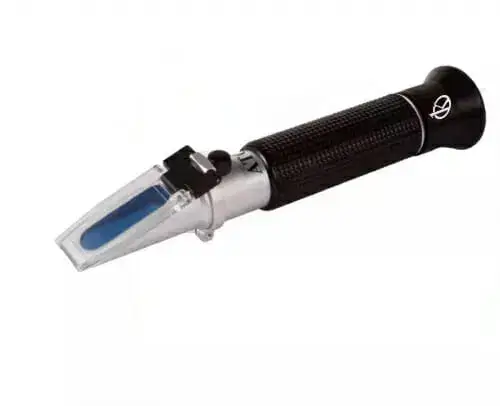
Salinity Refractometers: Practical Applications and Techniques 2026
What is it used for in 2026
Salinity refractometers are essential instruments in various laboratory settings, facilitating the measurement of salinity levels in liquid samples. They play a critical role in aquatic biology, chemistry, and industry, particularly in marine environments. In 2026, their applications range from quality control in aquaculture to environmental monitoring of saline water bodies. Understanding salinity is crucial in processes such as fish breeding, water treatment, and agricultural practices in saline soils.
History and evolution of the technology
The technology of refractometry has evolved significantly since its inception. Originally, refractometers were used primarily in the sugar industry to measure sugar concentration in solutions. Over time, their application expanded to include the measurement of salinity in seawater and brine solutions. The introduction of digital refractometers and automatic temperature compensation (ATC) has improved accuracy and ease of use in contemporary models, facilitating their adoption in various scientific fields.
How to use it step by step
Using a salinity refractometer involves several straightforward steps:
- Calibration: Before use, calibrate the refractometer with distilled water or a standard solution to ensure accuracy.
- Sample Preparation: Collect the liquid sample to be measured. Ensure it is free from bubbles and particulate matter.
- Loading the Sample: Place a few drops of the sample onto the prism of the refractometer.
- Close the Cover: Gently close the cover to spread the liquid evenly over the prism surface.
- Reading the Measurement: Look through the eyepiece and read the salinity level indicated on the scale. For digital models, the reading will be displayed on the screen.
- Cleaning: After use, clean the prism with distilled water and a soft cloth to avoid contamination.
Best techniques and protocols
To ensure accurate and reliable measurements when using salinity refractometers, follow these best techniques:
- Always calibrate the device before each use.
- Ensure the sample temperature is within the specified range for accurate readings.
- Use clean equipment and avoid cross-contamination between samples.
- Document readings consistently for tracking and quality control purposes.
- Regularly maintain and service the refractometer to ensure longevity and reliability.
Practical applications by laboratory type
Salinity refractometers find applications in various laboratory types:
- Marine Biology Laboratories: Used to measure salinity in marine organisms’ habitats to analyze biological systems.
- Aquaculture: Essential for monitoring salinity levels to ensure optimal conditions for aquatic species.
- Chemical and Environmental Research: Employed in studies of water quality and environmental management.
- Food Industry: Used in assessing salt levels in products for quality control.
Regulations, standards and certifications
Salinity refractometers must comply with industry standards to ensure reliability. Laboratories are encouraged to adhere to ISO standards relating to accuracy and calibration procedures. Certificates of compliance and calibration should be maintained as part of quality assurance practices, particularly for laboratories involved in research and regulatory testing.
Comparison with alternative technologies
While salinity refractometers are widely used, other technologies also serve similar purposes:
- Conductivity Meters: Measure salinity based on electrical conductivity but may not provide direct salinity readings.
- Hydrometers: Offer a simple method to measure salinity but are less accurate than refractometers.
- Digital Salinity Sensors: Provide real-time monitoring but can be significantly more expensive and complex to operate.
Comparison of available models
| Model | Best for | Key specs | Recommended use case |
|---|---|---|---|
| YR05887 | Measuring salinity in aquaculture | Salinity: 2-4% (20-40ppt), Specific Gravity: 1.015-1.030sg | Quality control in saltwater aquariums |
| YR05888 | Testing brine solutions | Salinity: 0-4% (0-40ppt), Specific Gravity: 1.000-1.030sg | Food industry quality checks for salinity |
| YR05913 | Environmental monitoring | Salinity: 2-4% (20-40ppt), Specific Gravity: 1.015-1.030sg | Analyzing water quality in coastal environments |
| YR05914 | Laboratory research | Salinity: 0-4% (0-40ppt), Specific Gravity: 1.000-1.030sg | Research on saline ecosystems |
Common mistakes and how to avoid them
Common mistakes in using salinity refractometers include:
- Inadequate Calibration: Always calibrate before each measurement to ensure accuracy.
- Ignoring Temperature Effects: Consider temperature variations as they can significantly affect readings; use models with ATC.
- Dirty Prism: Not cleaning the prism properly can lead to contamination; ensure it is wiped clean after each use.
- Incorrect Sample Size: Using too little or too much sample can skew results; use the recommended amount.
Maintenance, calibration and good practices 2026
To maintain the accuracy and longevity of salinity refractometers:
- Perform regular calibrations with standard solutions.
- Store the device in a protective case when not in use.
- Keep it away from direct sunlight and extreme temperature fluctuations.
- Check and replace any worn components as necessary.
Cost-benefit analysis 2026
When assessing the cost-effectiveness of salinity refractometers, consider:
- Initial investment costs versus potential savings in quality control failures.
- Long-term reliability and accuracy leading to better operational efficiencies.
- The ability to perform precise measurements as a key factor in research funding opportunities.
Frequently asked questions
What should I consider when choosing a salinity refractometer?
When choosing a salinity refractometer, consider factors like measurement range, accuracy, ease of use, and whether the model includes automatic temperature compensation (ATC).
How often should I calibrate my refractometer?
It is recommended to calibrate your refractometer before each use to ensure accurate measurements, especially if you are measuring different samples.
Can I use a salinity refractometer for freshwater samples?
Salinity refractometers are primarily designed for saline solutions. Using them for freshwater can yield inaccurate results unless the refractometer has a wide enough range to measure low salinity levels.
What is the difference between analog and digital salinity refractometers?
Analog refractometers require manual reading through an eyepiece, while digital refractometers display readings on a screen, making them easier and quicker to read.
How do I clean and maintain my salinity refractometer?
To clean your refractometer, use distilled water and a soft cloth after each use. Ensure it is stored in a protective case to avoid damage.
Why is temperature compensation important in salinity measurements?
Temperature affects the density of liquids, which in turn can affect salinity readings. Automatic temperature compensation (ATC) helps to provide accurate readings across various temperatures.
Where can I request a quote for a salinity refractometer?
You can request a quote for salinity refractometers and other laboratory equipment directly through Kalstein's contact channels to receive tailored advice and competitive pricing.
If you are looking for a fusion of innovation and quality, you have come to the right place. At Kalstein, we offer you the luxury of exploring our exclusive catalog of laboratory equipment. We manufacture every device to the highest standards of excellence. Our intuitive and seamless online purchasing channels are designed for your convenience, securing the most competitive prices. Hesitate no longer — we bring science to life, it is time to become part of our community.