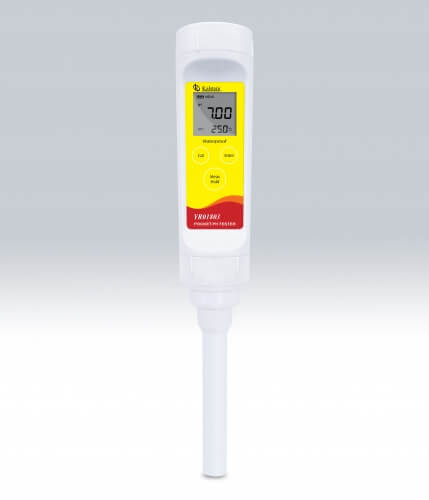
Portable pH Meters: Practical Use Guide for 2026
What is it used for in 2026
Portable pH meters are essential instruments used in various laboratory and field settings for measuring the acidity or alkalinity of a solution. In 2026, these devices have become indispensable in environmental testing, food and beverage industries, aquaculture, and educational institutions, among others. Their portability allows for on-site pH measurements, making them ideal for research and quality control applications.
History and evolution of the technology
The development of pH measurement technology dates back to the early 20th century, with the invention of glass electrodes. Over the decades, significant advancements have been made, leading to the compact and user-friendly portable pH meters we have today. The introduction of digital displays, automatic temperature compensation, and improved electrode materials has greatly enhanced accuracy and usability.
How to use it step by step
Using a portable pH meter involves several straightforward steps:
- Preparation: Ensure the meter is clean and calibrated.
- Calibration: Calibrate the device using standard buffer solutions.
- Measurement: Submerge the electrode in the sample and allow the reading to stabilize.
- Recording: Note the pH value displayed on the meter.
- Cleaning: Rinse the electrode with distilled water after use to prevent contamination.
Best techniques and protocols
To ensure accurate pH measurements, adhere to the following protocols:
- Always calibrate before use with fresh buffer solutions.
- Allow sufficient time for the reading to stabilize.
- Use appropriate storage solutions for electrodes when not in use.
- Conduct regular maintenance and cleaning of the meter.
Practical applications by laboratory type
Portable pH meters find applications in various laboratory types:
- Environmental laboratories: Monitoring soil and water quality.
- Food and beverage laboratories: Ensuring product quality and safety.
- Aquaculture: Managing water conditions for aquatic life.
- Educational institutions: Conducting experiments and teaching basic science principles.
Regulations, standards and certifications
In 2026, laboratories using portable pH meters must comply with several regulations and standards. These may include ISO standards for laboratory equipment, calibration standards, and environmental regulations applicable to the specific industry. Ensuring that your pH meter is certified and meets relevant standards is crucial for reliable results.
Comparison with alternative technologies
While portable pH meters are widely used, alternative technologies such as benchtop pH meters and colorimetric pH tests exist. Benchtop meters offer higher precision and are suitable for stationary applications, whereas colorimetric tests may be used for quick assessments but lack the accuracy of electronic meters. The choice of technology depends on the application requirements and environmental conditions.
Comparison of available models
| Model | Best for | Key specs | Recommended use case |
|---|---|---|---|
| YR01803 | High precision measurements | pH range: -1.00 to 15.00; Accuracy: ±0.01 pH | Lab testing and field research |
| YR01804 | Outdoor applications | pH range: -1.00 ~ 15.00; Manual temperature compensation | Environmental monitoring |
| YR01800 | Portable and user-friendly | pH range: -1.00~15.00; IP57 waterproof | Field studies |
| YR01800-1 | Compact design | pH range: -1.00~15.00; IP57 waterproof | On-the-go measurements |
| YR01802 | Measuring semi-solids | pH range: -1.00 to 15.00; Dual LCD display | Food industry applications |
| YR01802-1 | Surface measurements | pH range: -1.00 to 15.00; Dual LCD display | Laboratory testing |
Common mistakes and how to avoid them
Common mistakes when using portable pH meters include:
- Failing to calibrate before use.
- Not rinsing the electrode properly between samples.
- Using expired buffer solutions.
- Neglecting regular maintenance and cleaning.
Avoid these mistakes by establishing standard operating procedures and training personnel on proper usage.
Maintenance, calibration and good practices 2026
Regular maintenance of portable pH meters includes:
- Calibrating regularly, ideally before each measurement session.
- Cleaning the electrode according to manufacturer's guidelines.
- Storing the electrode in an appropriate solution when not in use.
- Replacing worn or damaged electrodes to ensure accuracy.
Cost-benefit analysis 2026
When evaluating the cost-benefit of portable pH meters, consider:
- The initial investment versus the accuracy and efficiency gained in measurements.
- Potential savings from avoiding costly errors in product quality control.
- Increased flexibility in testing capabilities in various environments.
Overall, the benefits of investing in reliable portable pH meters outweigh the costs for most laboratory settings in 2026.
Frequently asked questions
What should I consider when choosing a portable pH meter?
Consider the accuracy, range, durability, and features such as automatic temperature compensation and calibration options to find a model that fits your specific needs.
How often should I calibrate my portable pH meter?
Calibration should occur before each use or at least daily if used frequently. Ensure you use fresh buffer solutions for accurate results.
Can I use a portable pH meter for measuring semi-solids?
Yes, models like the YR01802 and YR01802-1 are specifically designed for measuring pH in semi-solids, providing accuracy for those applications.
What maintenance does a portable pH meter require?
Regularly clean the electrode, calibrate it as specified, and ensure proper storage when not in use to maintain its performance and longevity.
Are portable pH meters suitable for outdoor use?
Yes, many portable pH meters, such as the YR01804, are designed for outdoor applications, featuring durable and weather-resistant designs.
How do I extend the lifespan of my portable pH meter?
Follow proper maintenance routines, including regular calibration and cleaning, and store the device in suitable conditions to extend its lifespan.
If you are looking for a fusion of innovation and quality, you have come to the right place. At Kalstein, we offer you the luxury of exploring our exclusive catalog of laboratory equipment. We manufacture every device to the highest standards of excellence. Our intuitive and seamless online purchasing channels are designed for your convenience, securing the most competitive prices. Hesitate no longer — we bring science to life, it is time to become part of our community.