Oil Baths: Practical Usage Guide Step by Step in 2026
What is it used for in 2026
Oil baths are essential equipment in various laboratory settings, particularly for maintaining precise temperature control during heating applications. They are widely used in fields such as bioengineering, medicine, food processing, and chemical industries. In 2026, oil baths have become increasingly important for processes requiring stable and uniform temperature, including digestion, extraction, and distillation. Their applications extend to institutions like research facilities, universities, and manufacturing labs, where reliable temperature control is crucial for experiment accuracy and safety.
History and evolution of the technology
The concept of using oil for temperature regulation dates back many decades. Early models of oil baths were simplistic and limited in their ability to maintain consistent temperatures. However, technological advancements have led to significant improvements in precision, efficiency, and safety. With the integration of PID controllers and advanced insulation technologies, modern oil baths can achieve rapid temperature rises and maintain stable settings, making them indispensable for laboratory professionals.
How to use it step by step
Using an oil bath effectively involves several steps:
- Preparation: Ensure the oil bath is clean and free of contaminants. Use appropriate oil based on the required temperature range.
- Set-Up: Place the oil bath on a stable, heat-resistant surface, ensuring it is level for accurate temperature readings.
- Fill with Oil: Pour the oil into the bath chamber as per the manufacturer's guidelines, taking care not to exceed the maximum fill line.
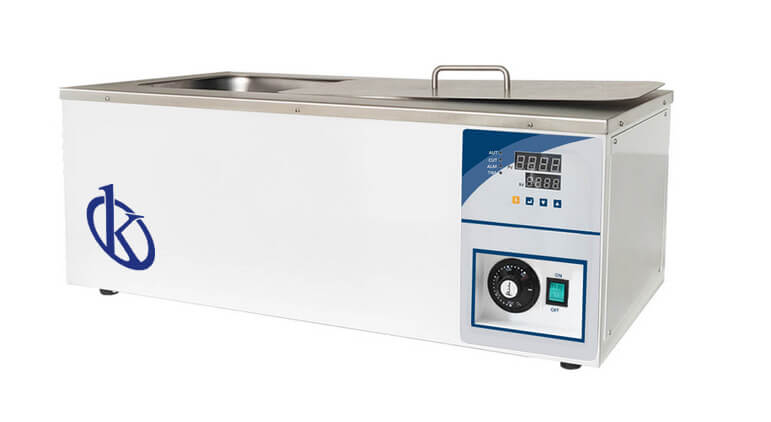
- Temperature Configuration: Switch on the device and set the desired temperature using the PID control panel.
- Monitoring: Regularly check the temperature display to ensure it stabilizes at the set point and make adjustments as necessary.
- Experimentation: Once stable, you can introduce samples into the bath, ensuring they are fully submerged for accurate results.
- Post-Usage: After completing experiments, turn off the oil bath, allow it to cool, and clean the chamber.
Best techniques and protocols
To ensure optimal performance from oil baths, follow these best practices:
- Preheat the oil bath before introducing samples to reduce thermal shock.
- Utilize magnetic stirring (if available) to maintain uniform temperature distribution within the oil.
- Choose the appropriate oil type; silicone oils are preferred for high temperature applications due to their stability.
- Regularly calibrate the temperature settings to maintain accuracy.
Practical applications by laboratory type
Different laboratory types utilize oil baths for various applications:
- Research Laboratories: For experimental setups requiring controlled heating during chemical reactions.
- Medical Laboratories: Used in procedures like tissue processing and sample heating before analysis.
- Food Industry: In applications like fat extraction and quality control testing.
- Chemical Industries: For distillation and synthesis processes requiring precise temperature control.
Regulations, standards and certifications
Oil baths must comply with various safety and operational standards, including:
- ISO 9001 for quality management systems.
- ASTM standards for laboratory equipment.
- CE marking for compliance with European health, safety, and environmental protection standards.
Comparison with alternative technologies
While oil baths are preferred for many applications, alternatives exist:
- Water Baths: Ideal for lower temperature applications but less effective for high-temperature control.
- Sand Baths: Provide good thermal conductivity but can be less uniform than oil baths.
Comparison of available models
| Model | Best for | Key specs | Recommended use case |
|---|---|---|---|
| YR04973 | Basic heating applications | 1000W, RT +5~250°C | Routine laboratory heating tasks. |
| YR04974 | Advanced heating tasks | 1200W, RT +5~250°C | For experiments requiring higher precision. |
| YR04975 | Complex assays | 1600W, RT +5~250°C | Suitable for multi-sample processes. |
| YR04976 | High-throughput applications | 2000W, RT +5~250°C | Best for extensive testing environments. |
Common mistakes and how to avoid them
Some common mistakes made when using oil baths include:
- Overfilling the oil bath, which can lead to spills and hazards. Always respect the fill line.
- Inadequate preheating of the oil bath before experiments, causing inconsistent results.
- Neglecting regular calibration of the temperature settings, leading to inaccurate readings.
Maintenance, calibration and good practices 2026
To maintain oil baths effectively, follow these practices:
- Clean the bath regularly to prevent contamination.
- Perform routine calibration checks every three months.
- Inspect power cords and connections for wear and replace as necessary.
Cost-benefit analysis 2026
Investing in an oil bath offers numerous benefits:
- Higher accuracy in experimental results due to consistent temperature control.
- Increased efficiency in laboratory workflows, reducing time and costs associated with repeated experiments.
- Long-term reliability with proper maintenance, ensuring sustained performance.
Frequently asked questions
How do I choose the right oil bath for my laboratory?
Consider factors such as the temperature range, power requirements, and the specific needs of your experiments to select the most suitable oil bath model.
Can I use an oil bath for all types of heating?
No, oil baths are best for applications requiring stable temperature control and should not be used for processes that could lead to oil contamination.
What safety precautions should I take when using an oil bath?
Always wear appropriate personal protective equipment, ensure the bath is on a stable surface, and avoid overfilling to prevent accidents.
How often should I calibrate my oil bath?
Calibration should be performed at least every three months or more frequently if the bath is used extensively.
What types of oil are suitable for use in oil baths?
Silicone oils are preferred for their stability at high temperatures, but always refer to manufacturer specifications for recommended oil types.
Is maintenance of an oil bath difficult?
Maintenance is relatively straightforward; regular cleaning and periodic calibration are key to ensuring optimal performance.
Where can I request a quote for an oil bath?
You can request a quote on Kalstein Plus for the best prices and options available for oil baths.
If you are looking for a fusion of innovation and quality, you have come to the right place. At Kalstein, we offer you the luxury of exploring our exclusive catalog of laboratory equipment. We manufacture every device to the highest standards of excellence. Our intuitive and seamless online purchasing channels are designed for your convenience, securing the most competitive prices. Hesitate no longer — we bring science to life, it is time to become part of our community.