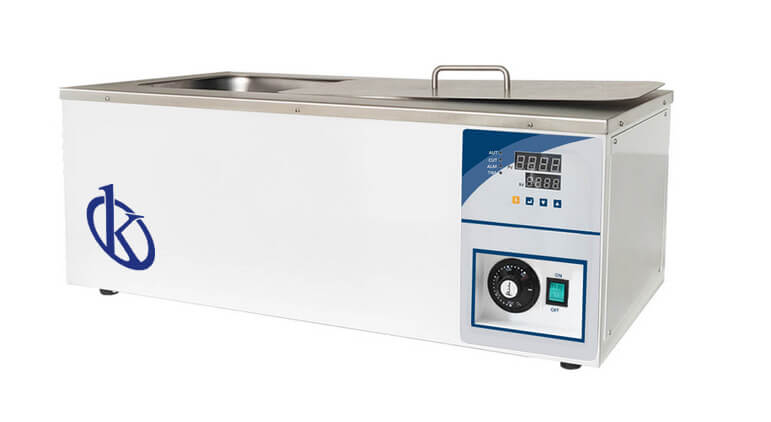
Maximizing ROI and Cost-Benefit Analysis for Oil Baths in Laboratories
In today's competitive laboratory environment, the need for cost-efficiency and optimized investments is paramount. Oil baths, integral for various applications in bioengineering, medicine, and chemical industries, serve as essential equipment for achieving precise temperature control. This article aims to provide a comprehensive analysis of how oil baths can enhance return on investment (ROI) through effective cost-benefit evaluation. We will explore various models, their applications, and how they contribute to a laboratory's operational efficiency.
Understanding the Role of Oil Baths in Laboratories
Oil baths are widely employed in laboratory settings, particularly in fields that require consistent temperature maintenance for experiments or processes. Their significance extends across multiple disciplines, including bioengineering, food science, and chemical testing. By offering precise temperature control and stability, oil baths ensure the reliability of experimental outcomes, which is crucial for research validity.
When considering oil baths as an investment, it's vital to assess their operational costs against the benefits they provide. Factors such as energy consumption, maintenance needs, and the frequency of use can significantly impact the overall ROI. Understanding these parameters is critical for laboratory managers aiming to make informed decisions about their equipment purchases.
Comparison of Available Models
| Model | CAPEX (USD) | Cost per test | Payback (months) | Recommended scenario |
|---|---|---|---|---|
| YR04973 | 150.00 | 5.00 | 12 | Small labs with low to medium usage |
| YR04974 | 165.00 | 5.50 | 13 | Medium labs requiring moderate temperature control |
| YR04975 | 192.00 | 6.00 | 14 | Laboratories with high throughput needs |
| YR04976 | 250.00 | 7.00 | 15 | Specialized labs with extensive operational demands |
Cost-Benefit Analysis: What to Consider
When evaluating the cost-benefit of oil baths, several factors must be considered:
- Initial Capital Expenditure (CAPEX): This includes the purchase price and installation costs. Lower-priced models like YR04973 and YR04974 are ideal for small to medium labs, but may not offer the same performance as higher-priced alternatives.
- Operating Expenses (OPEX): These involve energy consumption and maintenance. Models like YR04975 and YR04976, although more expensive, may prove to be more energy-efficient and reliable in the long run.
- Return on Investment (ROI): Calculating the payback period is essential. The models with a shorter payback period provide quicker returns on the initial investment.
Common Mistakes and How to Avoid Them
Laboratory managers often make several mistakes when considering the purchase of oil baths:
- Neglecting Total Cost of Ownership (TCO): Focusing solely on the initial purchase price without considering operational costs can lead to poor investment decisions.
- Underestimating Usage Requirements: Failing to assess the specific needs of the laboratory can result in selecting a model that does not meet operational demands.
- Lack of Performance Evaluation: Not considering the performance specifications of different models can result in purchasing equipment that does not deliver the required results.
Enhancing Laboratory Efficiency with Oil Baths
To maximize the benefits of oil baths, laboratories should focus on optimizing usage protocols and maintenance schedules:
- Regular Maintenance: Ensuring oil baths are regularly serviced can prevent costly downtime and extend the lifespan of the equipment.
- Optimized Temperature Settings: Setting the appropriate temperature for specific applications can reduce energy consumption and enhance performance.
- Training Staff: Proper training for laboratory personnel on the operation and maintenance of oil baths can significantly impact efficiency and safety.
Frequently Asked Questions
How can I determine the ROI of purchasing an oil bath model like YR04973?
To determine the ROI, calculate the total savings from improved efficiency and reduced downtime from using the oil bath. For example, if YR04973 costs $150 and saves $12 monthly on energy bills, the payback period would be around 12.5 months, contributing positively to your ROI.
What are the energy consumption metrics for oil baths compared to other equipment?
Oil baths typically consume around 1000W, with models like YR04976 offering efficiency features that can lower overall energy costs. Calculating kWh usage based on operational hours can help compare energy footprints with other laboratory equipment.
What maintenance practices maximize the lifespan of an oil bath such as YR04974?
Regular maintenance, including checking temperature calibration and cleaning the heating elements, is crucial. Following the manufacturer's guidelines and scheduling inspections every six months can significantly extend the operational lifespan of models like YR04974.
Which oil bath model is best for high-throughput laboratories?
For high-throughput laboratories, the YR04975 is an excellent choice, featuring a robust design that supports continuous operation while providing accurate temperature control. Its power of 1600W is ideal for demanding environments.
How does the cost per test vary across different oil bath models?
The cost per test for models like YR04973 is approximately $5.00, while YR04976 may reach $7.00 due to higher operational efficiency and features. Evaluating these metrics helps laboratories budget effectively.
What specific applications benefit most from using oil baths in laboratories?
Oil baths are particularly beneficial in applications requiring precise temperature control, such as chemical reactions in organic chemistry and temperature-sensitive biological experiments. Models like YR04974 can provide the necessary stability for these tasks.
How do I assess the long-term investment potential of my laboratory oil bath?
Assess long-term investment potential by calculating predicted savings from increased efficiency and reduced operational risks. For instance, models like YR04975 can reduce test inconsistencies, providing a higher return on your initial investment through reliable results.
What factors influence the decision to choose one oil bath model over another?
Factors influencing model selection include initial cost, energy efficiency, performance characteristics, and specific laboratory needs. Understanding these parameters can guide decisions towards models like YR04976 or YR04975 based on operational demands.
If you are looking for a fusion of innovation and quality, you have come to the right place. At Kalstein, we offer you the luxury of exploring our exclusive catalog of laboratory equipment. We manufacture every device to the highest standards of excellence. Our intuitive and seamless online purchasing channels are designed for your convenience, securing the most competitive prices. Hesitate no longer — we bring science to life, it is time to become part of our community.