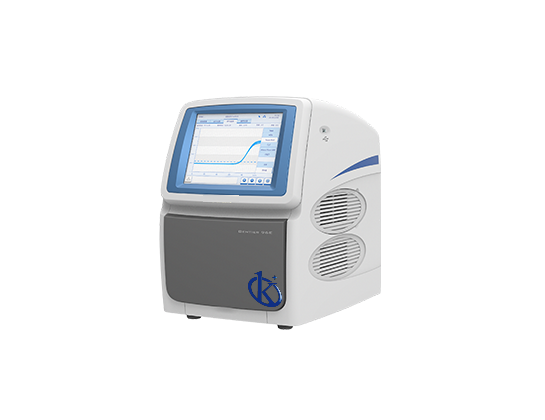
Interpreting Results and Measurement Readings with the YR01869 Real-Time PCR System
The YR01869 Real-Time PCR System is a state-of-the-art equipment designed for high-performance laboratories, facilitating precise and rapid results for various applications in molecular biology. This article focuses on interpreting results and reading measurements accurately within the context of using the YR01869, ensuring operators can leverage its advanced features to generate reliable data.
Technical Specifications of the YR01869
| Parameter | Specification |
|---|---|
| Model | YR01869 |
| Performance | 96 samples |
| Fluorescence Channels | 5 channels |
| Fluorescence Reading Time | 7 seconds |
| Temperature Control Method | Peltier |
| Heating Rate | 6.1 °C/s |
| Cooling Rate | 5.0 °C/s |
| Temperature Uniformity | ±0.1 °C |
| Weight | 30 kg |
| Dimension | 555 x 475 x 484 mm |
Understanding PCR and Its Measurement Readings
Polymerase Chain Reaction (PCR) is a technique used to amplify DNA segments, making it easier to study genetic sequences. The YR01869 employs real-time PCR, allowing for the monitoring of the amplification process as it occurs. Results are typically displayed in terms of cycle threshold (Ct) values, which indicate the number of cycles required for the fluorescence signal to exceed a defined threshold.
Key to accurate measurement interpretation is understanding the significance of the Ct value. Lower Ct values correspond to higher initial quantities of target DNA, while higher Ct values indicate lower initial quantities. It is essential to maintain consistency in interpretation by utilizing standard curves and controls to establish baseline measurements.
Common Misinterpretations of Results
Operators must be cautious of misinterpreting results generated by the YR01869. A common mistake is assuming that a lower Ct value directly equates to better quality of the DNA sample. Factors such as primer efficiency, sample purity, and the presence of inhibitors can affect the Ct value. Additionally, background noise or signal saturation can mislead the interpretation of fluorescence readings.
To mitigate these issues, it is recommended to run controls alongside test samples and to employ dilution series to assess the sample's behavior under varying conditions. This method fosters a more accurate understanding of the results.
Best Practices for Reading Measurement Outputs
When interpreting results from the YR01869, it is vital to follow certain best practices. First, familiarize yourself with the software, Gentier 96 E/R, which offers advanced analysis tools for data interpretation. Set proper thresholds for fluorescence detection to minimize background noise interference.
Second, ensure that all controls (positive, negative, and no-template controls) are included in your assays. This step is crucial in validating the specificity and reliability of the results obtained. Finally, take note of the amplification curves displayed, as they provide visual insight into the efficiency and dynamics of the PCR process.
Utilizing Calibration and Validation Techniques
The YR01869 provides options for calibration and validation that enhance measurement accuracy. Performing routine calibration checks on the fluorescence detection system and the temperature control elements will help ensure that the equipment operates within required specifications.
Validation of measurement outputs should involve the assessment of linearity, repeatability, and sensitivity. These techniques can significantly contribute to the credibility of your results, allowing for confident conclusions in research and diagnostic applications.
Interpreting Fluorescence Data: Insights from the YR01869
The YR01869’s compatibility with various dyes, including FAM, ROX, and Cy5, allows for versatile applications in quantification. Each dye has specific excitation and emission spectra, impacting how fluorescence data is interpreted.
Operators must be aware of the spectral overlap and compensation techniques required when using multiplex assays. Properly compensating for spectral overlap is critical to ensure that the measured fluorescence accurately represents the intended signal from each dye, enabling reliable quantification and interpretation of mixed samples.
Sector Adaptations for the YR01869
The YR01869 is used across various sectors, including clinical diagnostics, environmental monitoring, and food safety. Each sector has unique requirements for interpreting results. For instance, in clinical labs, understanding the implications of Ct values on disease diagnosis is crucial, while in food safety, detection of pathogen DNA must meet regulatory standards.
Tailoring the interpretation approach to the specific sector enhances the utility of the YR01869. Implementing case studies or examples related to each sector can further illustrate practical applications and interpretation strategies.
Frequently Asked Questions
How do I ensure consistent Ct values when using the YR01869?
To achieve consistent Ct values, always use the same primer sets, maintain equal reaction conditions, and validate your assay performance with reference standards. Regular calibration of the instrument and strict adherence to protocol will also help eliminate variability.
What should I do if the results from the YR01869 are inconsistent?
If results are inconsistent, first verify the sample quality and purity, then check for any instrument calibration issues. Running controls and replicates can also identify whether the problem lies in the sample or the assay setup.
Can I use the YR01869 for multiplex PCR?
Yes, the YR01869 is compatible with multiplex PCR. However, care must be taken to select dyes that do not overlap spectrally, and proper compensation techniques should be applied to ensure accurate interpretation of fluorescence data.
What are the common pitfalls when interpreting data from the YR01869?
Common pitfalls include misinterpreting Ct values without considering sample quality, overlooking the importance of controls, and failing to account for potential inhibition effects in reactions. Regular training and adherence to protocols can help mitigate these issues.
How can I improve the quality of my PCR results using the YR01869?
Improving PCR results can be achieved through optimizing primer designs, maintaining optimal reaction conditions, and performing regular maintenance and calibration on the YR01869. Utilizing experienced personnel to design experiments can also enhance overall assay performance.
Is it possible to automate the reading of results from the YR01869?
The YR01869 can be integrated with laboratory automation systems to facilitate high-throughput processing. Software configurations allow for automated analysis and reporting of results, streamlining laboratory workflows.
If you are looking to request a quote for the YR01869 Real-Time PCR System or learn more about its capabilities, please contact us for assistance.
If you are looking for a fusion of innovation and quality, you have come to the right place. At Kalstein, we offer you the luxury of exploring our exclusive catalog of laboratory equipment. We manufacture every device to the highest standards of excellence. Our intuitive and seamless online purchasing channels are designed for your convenience, securing the most competitive prices. Hesitate no longer — we bring science to life, it is time to become part of our community.