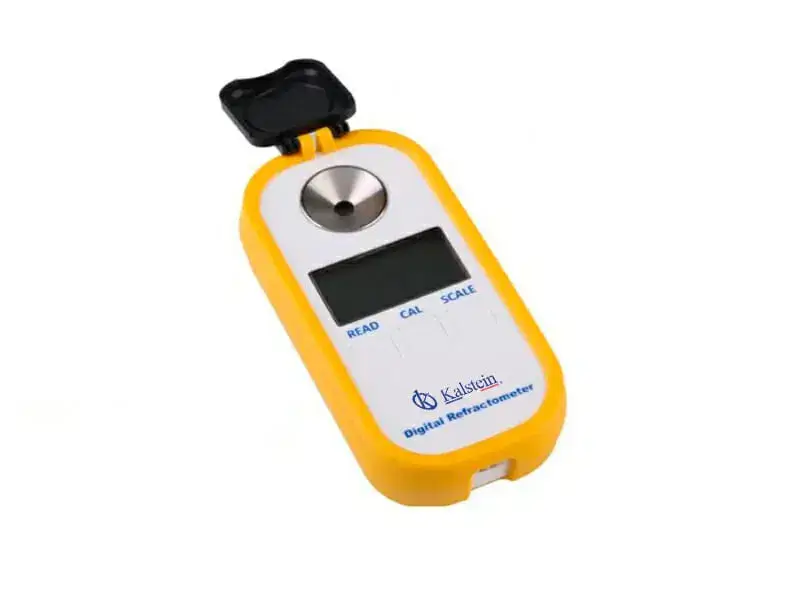
Digital BRIX+ Salinity Refractometer: Common Mistakes and How to Avoid Them in Daily Operation 2026
What is it used for in 2026
The Digital BRIX+ Salinity Refractometer is an essential tool for laboratory professionals, primarily used to measure the concentration of soluble solids in aqueous solutions. This includes the measurement of sugar content in fruit juices, syrups, and purees, as well as assessing salinity levels in solutions such as sodium chloride and seawater. With its automatic temperature compensation (ATC) feature, it ensures accurate readings across a range of temperatures (0-40°C), making it a reliable instrument for various applications.
History and evolution of the technology
The technology behind refractometers dates back to the early 19th century, primarily used in optical applications. As the need for precise measurement in food and beverage industries grew, the refractometer evolved into a more specialized instrument. The introduction of digital technology has significantly improved accuracy, ease of use, and reading clarity. Today, models like the ones in the Digital BRIX+ Salinity Refractometer family incorporate advanced features that cater to specific measurement needs in laboratories.
How to use it step by step
- Ensure the refractometer is clean and calibrated correctly.
- Place a few drops of the sample solution onto the prism surface.
- Close the cover and allow the instrument to stabilize.
- Read the value displayed on the digital screen.
- Record the reading and clean the prism with distilled water after use.
Best techniques and protocols
For optimal results, follow these best practices:
- Always ensure the refractometer is calibrated before use, preferably daily.
- Use distilled water for cleaning the prism to avoid contamination.
- Allow samples to reach room temperature for accurate measurements.
- Perform multiple readings for consistency and average the results.
Practical applications by laboratory type
Different laboratories utilize Digital BRIX+ Salinity Refractometers in various applications:
- Food and Beverage Laboratories: Measuring sugar content in beverages.
- Environmental Laboratories: Assessing salinity in water samples.
- Chemical Laboratories: Measuring the concentration of solutions for chemical reactions.
Regulations, standards and certifications
Laboratory instruments like the Digital BRIX+ Salinity Refractometers must comply with specific regulations and standards. Key certifications include ISO 9001 for quality management, ensuring that equipment meets international standards for accuracy and reliability. Furthermore, adherence to local laboratory regulations is crucial for operational compliance.
Comparison with alternative technologies
While Digital BRIX+ Salinity Refractometers are incredibly effective, alternative technologies exist:
- Hydrometers: Useful for measuring density but less precise for sugar concentration.
- Density Meters: Provide accurate density measurements, but may not directly correlate to sugar or salinity concentrations.
Comparison of available models
| Model | Best for | Key specs | Recommended use case |
|---|---|---|---|
| YR05961 | Brix Measurement | 0-50%, ±0.2% | Measuring sugar concentration in juices |
| YR05962 | Salinity Measurement | 0-280‰, ±0.2% | Assessing salt levels in seawater |
| YR05963 | Salinity Measurement | 0-280‰, ±2‰ | Measuring salinity in brine solutions |
| YR05964 | Density Measurement | 1.000-1.217, ±0.002 | Determining density of various solutions |
| YR05965 | Refractive Index Measurement | 1.3330-1.4200nD, ±0.0003nD | Measuring indices for chemical analysis |
Common mistakes and how to avoid them
Common mistakes in using the Digital BRIX+ Salinity Refractometers can affect measurement accuracy:
- Not calibrating regularly: Ensure regular calibration, ideally before each use.
- Inaccurate temperature adjustment: Always consider temperature effects on readings.
- Using contaminated samples: Clean the prism thoroughly to avoid cross-contamination.
- Ignoring manufacturer guidelines: Always refer to the user manual for best practices.
Maintenance, calibration and good practices 2026
Maintaining your Digital BRIX+ Salinity Refractometer is crucial for longevity and performance:
- Calibrate regularly using standard solutions for accuracy.
- Clean the prism with distilled water after each use.
- Store in a safe, dry place away from direct sunlight.
- Perform periodic checks on battery levels and replace as needed.
Cost-benefit analysis 2026
When evaluating the cost-benefit of Digital BRIX+ Salinity Refractometers:
- Initial Investment: Assess the upfront cost against expected usage frequency.
- Long-term Savings: Consider potential savings in waste reduction from accurate measurements.
- Efficiency Gains: Evaluate time saved through ease of use and quick readings.
Frequently asked questions
What is the best way to calibrate a Digital BRIX+ Salinity Refractometer?
To calibrate, use a standard calibration solution that matches the measurement range. Follow the manufacturer’s instructions closely for optimal results.
Can I measure salinity and sugar content in the same device?
Yes, models like the YR05961 and YR05962 allow you to measure both salinity and sugar concentration, making them versatile for various applications.
How often should I clean the refractometer?
It is advisable to clean the prism after each use to prevent cross-contamination and ensure accurate readings.
What should I do if the readings seem inconsistent?
Check for proper calibration, ensure the sample temperature is stable, and verify that the prism is clean before retaking measurements.
Are there special requirements for using this equipment in different environments?
Yes, consider the environmental conditions, such as temperature and humidity, that may affect readings. Always refer to the user manual for specific guidelines.
Can these refractometers be used in fieldwork?
Yes, they are portable and can be used in fieldwork, but ensure they are kept protected from extreme conditions.
Where can I request a quote for a Digital BRIX+ Salinity Refractometer?
Please reach out to us for a quote on our range of Digital BRIX+ Salinity Refractometers tailored to your laboratory needs.
If you are looking for a fusion of innovation and quality, you have come to the right place. At Kalstein, we offer you the luxury of exploring our exclusive catalog of laboratory equipment. We manufacture every device to the highest standards of excellence. Our intuitive and seamless online purchasing channels are designed for your convenience, securing the most competitive prices. Hesitate no longer — we bring science to life, it is time to become part of our community.